
The Equine Digital Cushion: Anatomy, Structure and Biomechanical Function
The Hoof: Far More Than a Horn Capsule
From the outside, the horse's hoof appears to be a rigid horn capsule whose primary purpose is to protect the sensitive tissues inside. In reality, the equine hoof is an extraordinarily sophisticated biomechanical structure that performs several functions simultaneously.
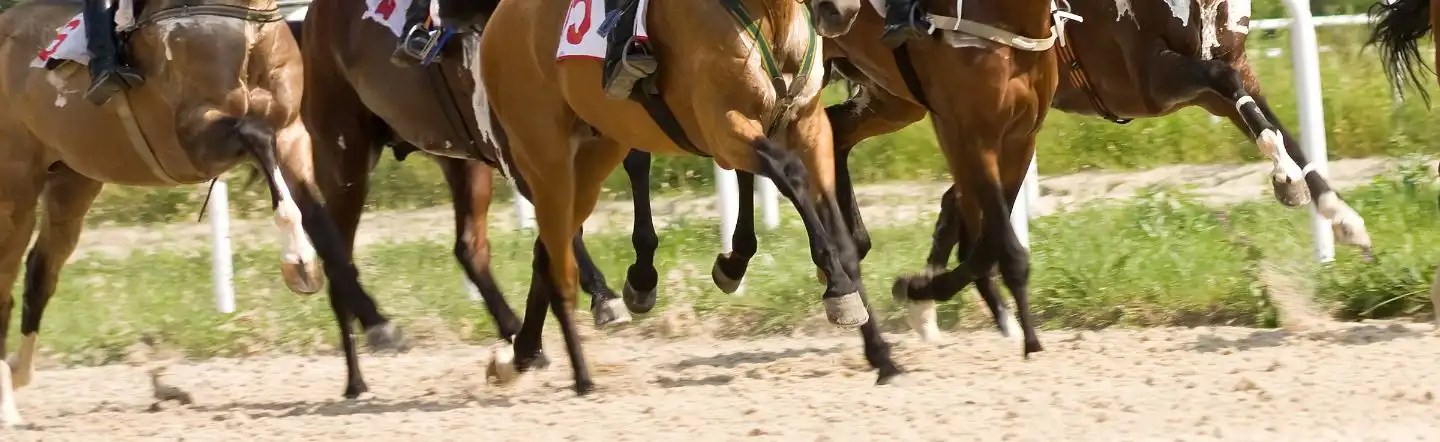
With every step, the hoof must absorb substantial impact forces, distribute loading throughout the limb, dampen concussion, stabilise the joints, store and release elastic energy, contribute to blood circulation and protect bones, tendons and ligaments.
During a fast gallop, these processes occur well over one hundred times every minute. Ground reaction forces may exceed two-and-a-half times, and in some circumstances more than three times, the horse's body weight.
The fact that the equine musculoskeletal system can tolerate millions of these loading cycles throughout a lifetime is closely related to the remarkable design and function of the hoof.
At the centre of this system lies the digital cushion, one of the key structures of the caudal hoof.
What Is the Equine Digital Cushion?
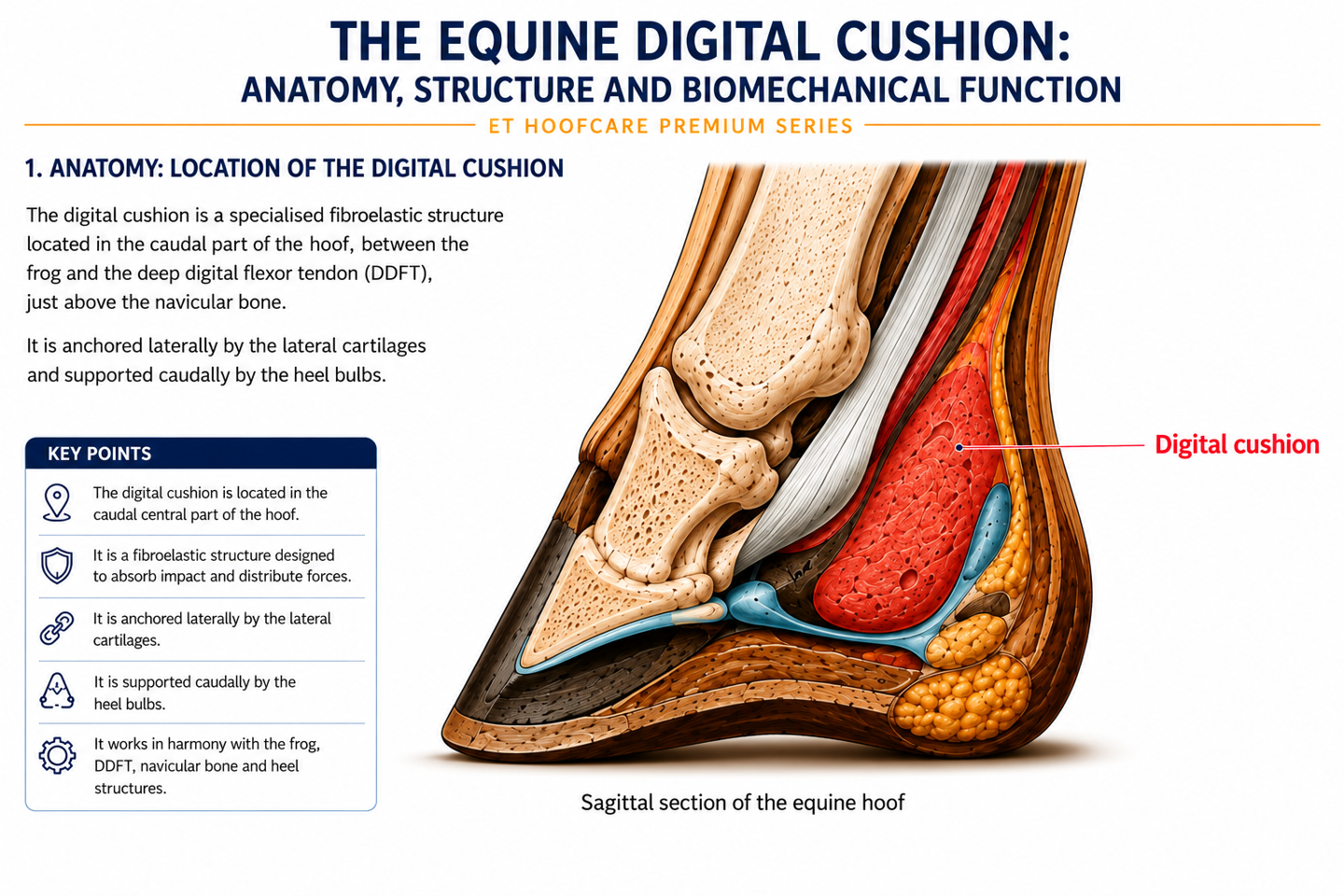
The digital cushion is a wedge-shaped structure composed of specialised fibroelastic and adipose tissue. It occupies much of the caudal portion of the hoof and is positioned above the frog, between the lateral or ungual cartilages and beneath the deep digital flexor tendon (DDFT).
It lies behind the coffin bone, or distal phalanx, and immediately in front of the heel bulbs.
Together with the frog, lateral cartilages and heel bulbs, the digital cushion forms an important component of the caudal hoof—the rear portion of the hoof responsible for managing many of the forces generated when the foot strikes the ground.
For many years, the hoof wall was believed to bear most of the horse's weight. Modern understanding of hoof biomechanics has shown that the caudal hoof plays a much more active role in weight-bearing and force management than previously thought.
The health and development of the digital cushion are therefore closely connected to the functional performance of the entire hoof.
Gross Anatomy of the Digital Cushion
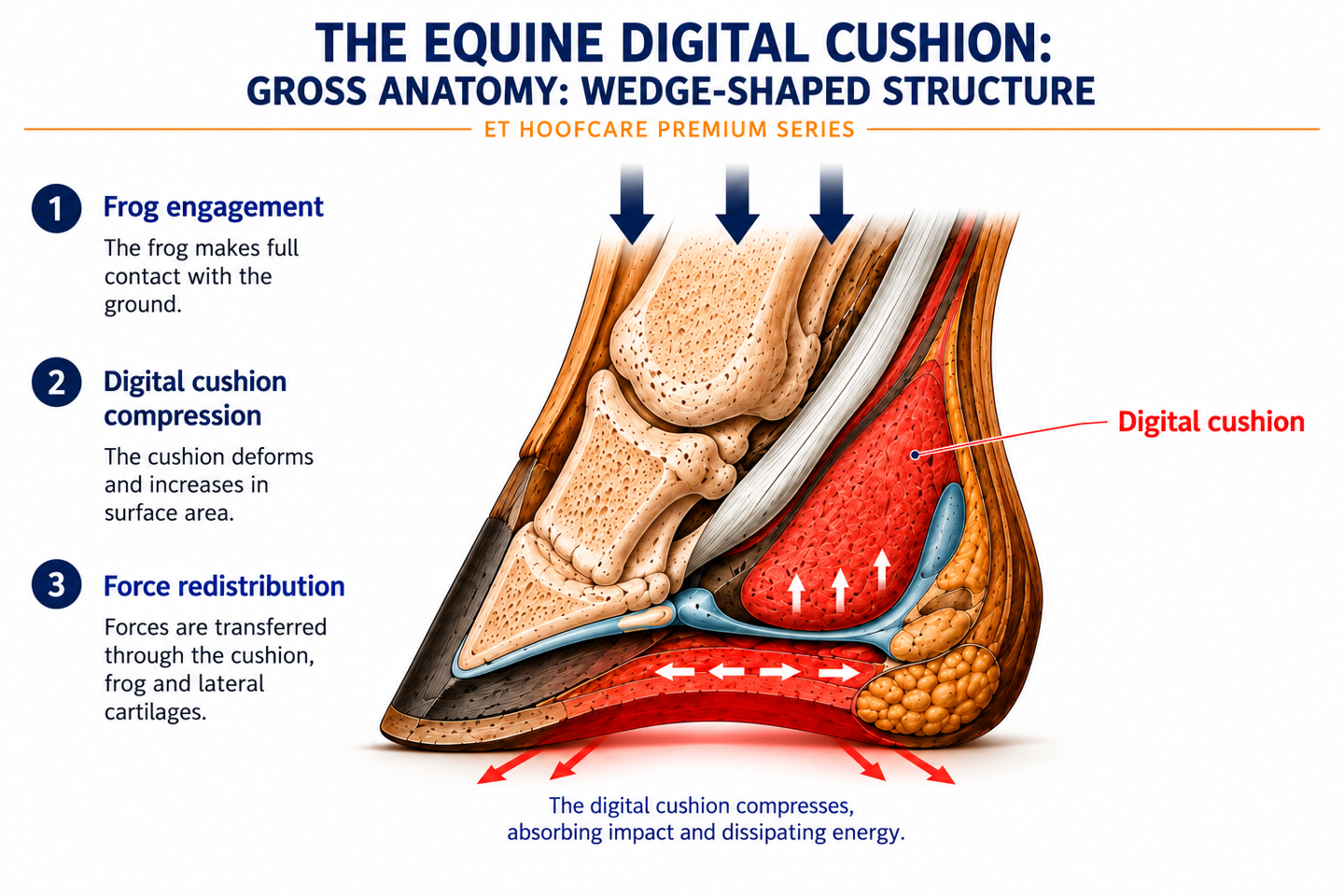
Viewed from above, the digital cushion has a broad wedge-shaped appearance.
Its widest portion lies between the heel bulbs, while its apex extends forward towards the navicular region.
The digital cushion is closely associated with several importaant anatomical structures, including the frog, lateral cartilages, deep digital flexor tendon, navicular bone, navicular bursa and palmar aspect of the coffin bone.
These anatomical relationships are important because the structures of the caudal hoof do not function independently.
Changes affecting one structure can influence the mechanical environment of the others. The digital cushion should therefore be considered as part of an integrated caudal hoof complex rather than as an isolated anatomical structure.
The Microanatomy of the Digital Cushion
At microscopic level, the digital cushion is far from uniform.
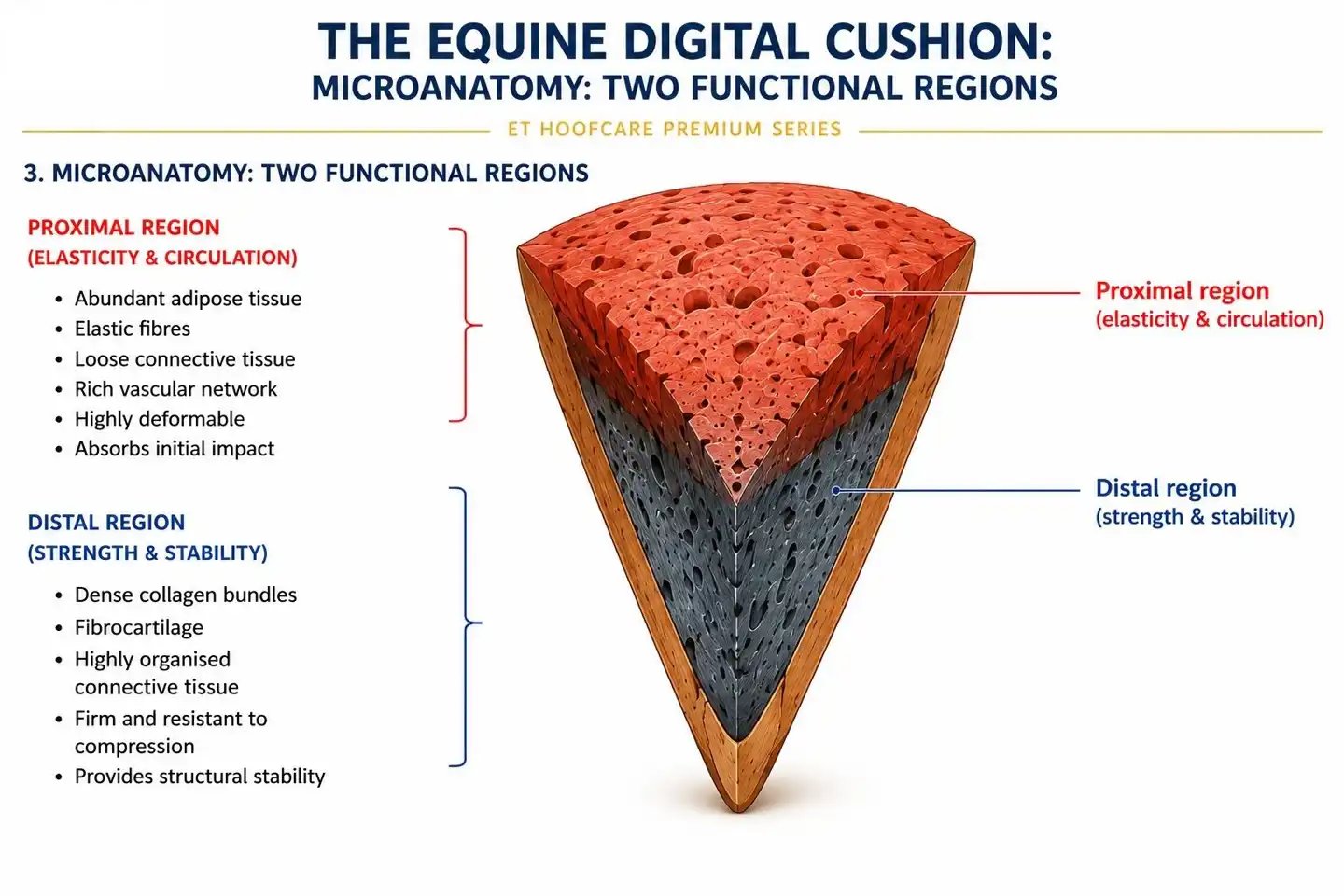
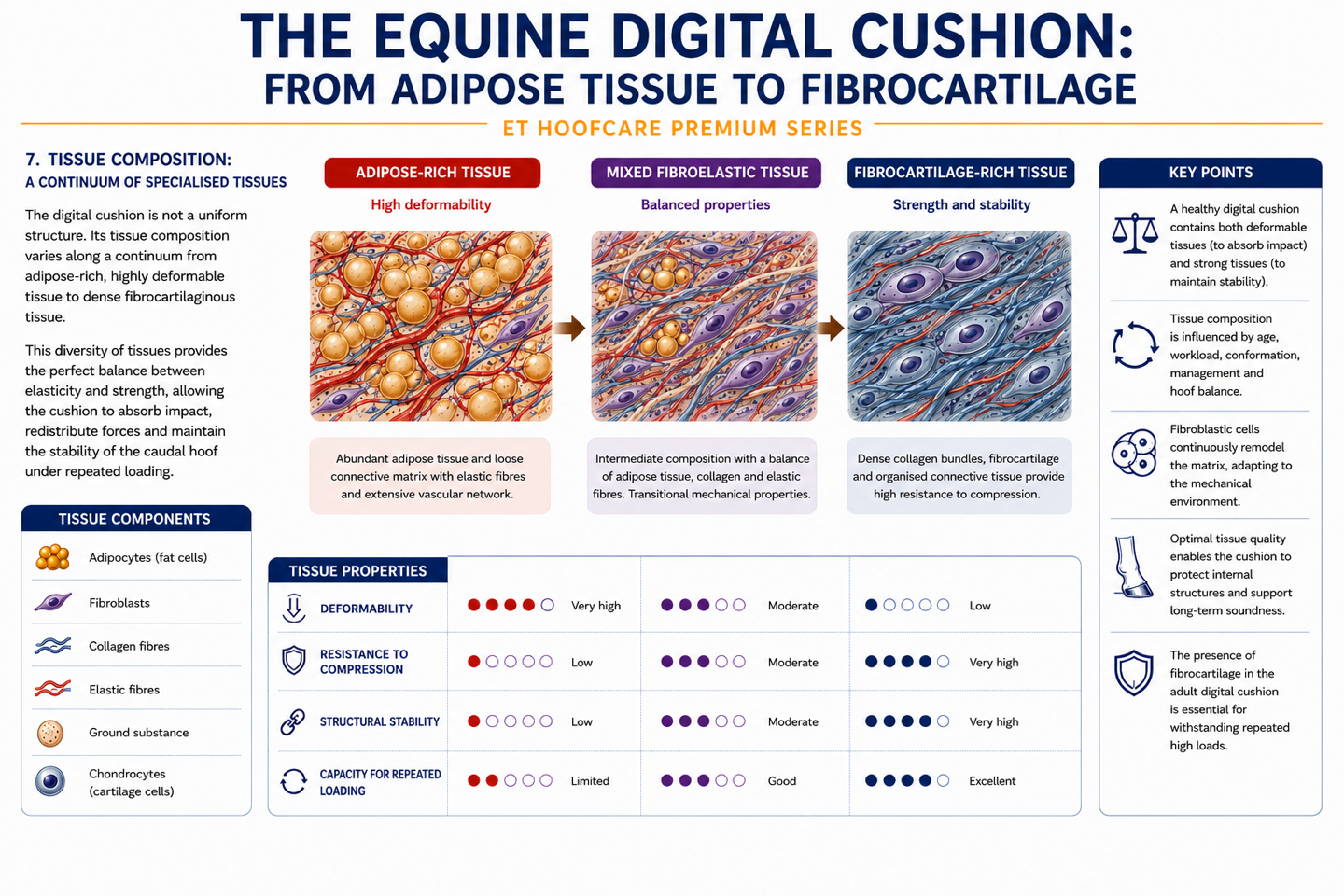
It contains specialised tissues with different structural and mechanical properties. These tissues can broadly be considered as two functional regions: a proximal region and a distal region.
The Proximal Region: Elasticity and Deformation
The proximal portion contains abundant adipose tissue, elastic fibres, loose connective tissue and an extensive vascular network.
This region is highly deformable and contributes to the management of the initial impact generated when the hoof contacts the ground.
Its rich blood supply also contributes to the circulatory function of the hoof.The combination of deformability, elasticity and vascularisation allows the proximal digital cushion to respond dynamically to mechanical loading.
The Distal Region: Strength and Structural Stability
The distal portion differs significantly from the proximal region.
It contains a greater proportion of dense collagen bundles, fibrocartilage and highly organised connective tissue. This tissue is considerably firmer and more resistant to compression.
Rather than simply collapsing under load, the distal region undergoes controlled deformation while maintaining structural stability.
This combination of elasticity and strength gives the digital cushion its ability to manage repeated loading while maintaining the integrity of the caudal hoof.
Why Is Fibrocartilage So Important?
One of the significant developments in modern equine hoof biomechanics has been the recognition that a healthy adult digital cushion is not composed primarily of fat.
In athletic horses, a substantial proportion of the tissue can consist of fibrocartilage. This specialised connective tissue possesses mechanical properties that make it particularly well suited to repeated loading.
Fibrocartilage is stronger than adipose tissue, more compliant than bone and highly resistant to compression. It can therefore tolerate repeated mechanical forces while maintaining structural integrity.
These characteristics make fibrocartilage an important biological material for managing the considerable forces generated within the hoof.
Research led by Professor Robert Bowker has contributed substantially to this understanding. His work has helped demonstrate the relationship between mechanical loading, fibrocartilage development and digital cushion function.
This research has contributed to a broader change in how veterinarians and farriers understand the caudal hoof. The digital cushion is not simply a soft fatty pad; it is a specialised biological structure whose composition and mechanical properties are related to the loading environment of the horse.
How Does the Digital Cushion Absorb Shock?
The digital cushion is often described as the horse's natural shock absorber. While this description is useful, its actual behaviour is considerably more sophisticated.
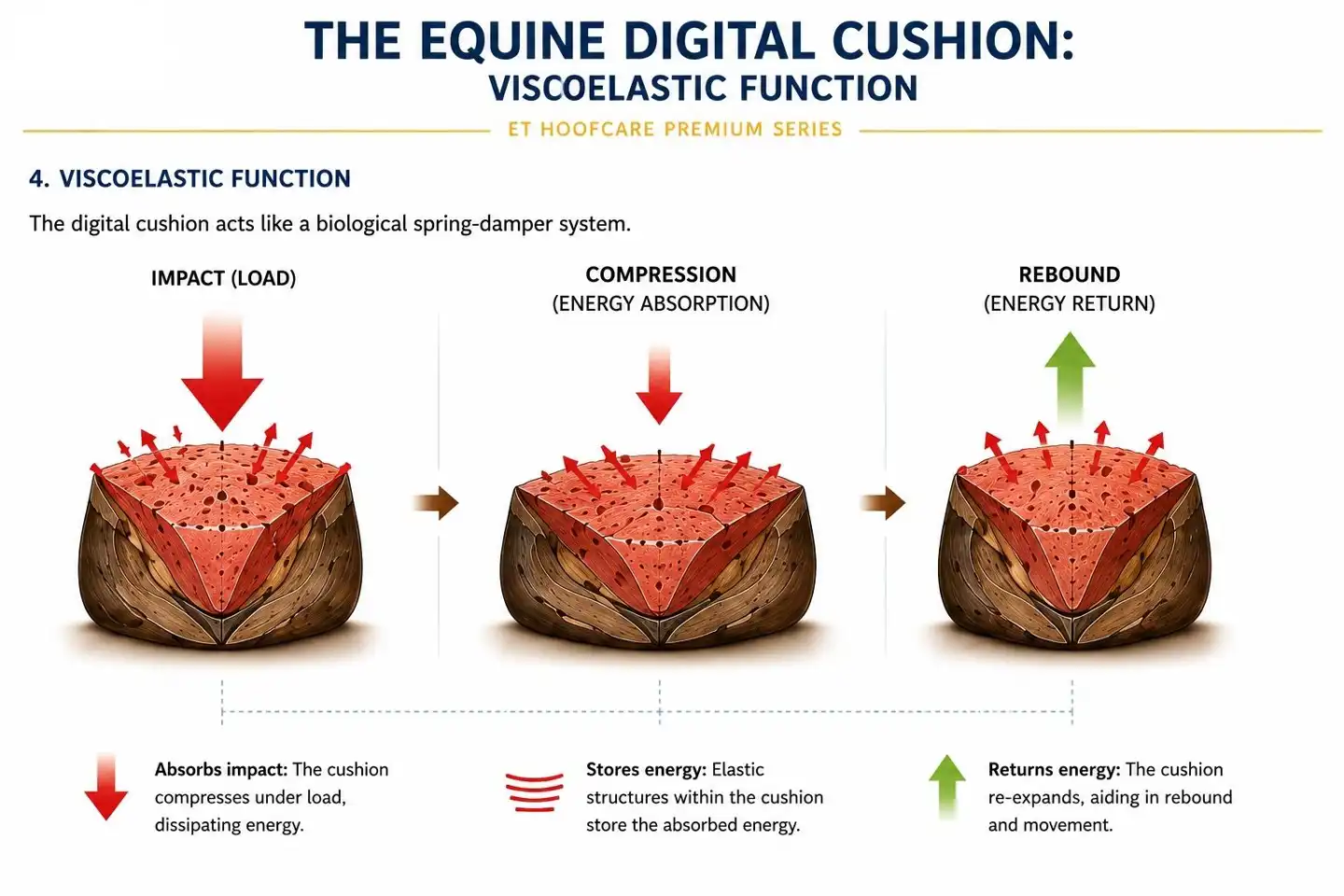
The digital cushion is a viscoelastic structure. When subjected to mechanical loading, it deforms in a controlled manner, absorbs mechanical energy and distributes forces throughout the caudal hoof.
Once the load is removed, the tissue gradually returns towards its original configuration.
Importantly, not all of the absorbed energy is lost. A portion can be temporarily stored and subsequently released during the locomotor cycle.
From an engineering perspective, the digital cushion can therefore be compared with a combined spring-and-damper system. It reduces damaging peak forces while retaining some capacity for elastic energy storage and return.
This balance between damping and energy return is an important part of the efficiency of equine locomotion.
The Digital Cushion Is a Living, Adaptive Tissue
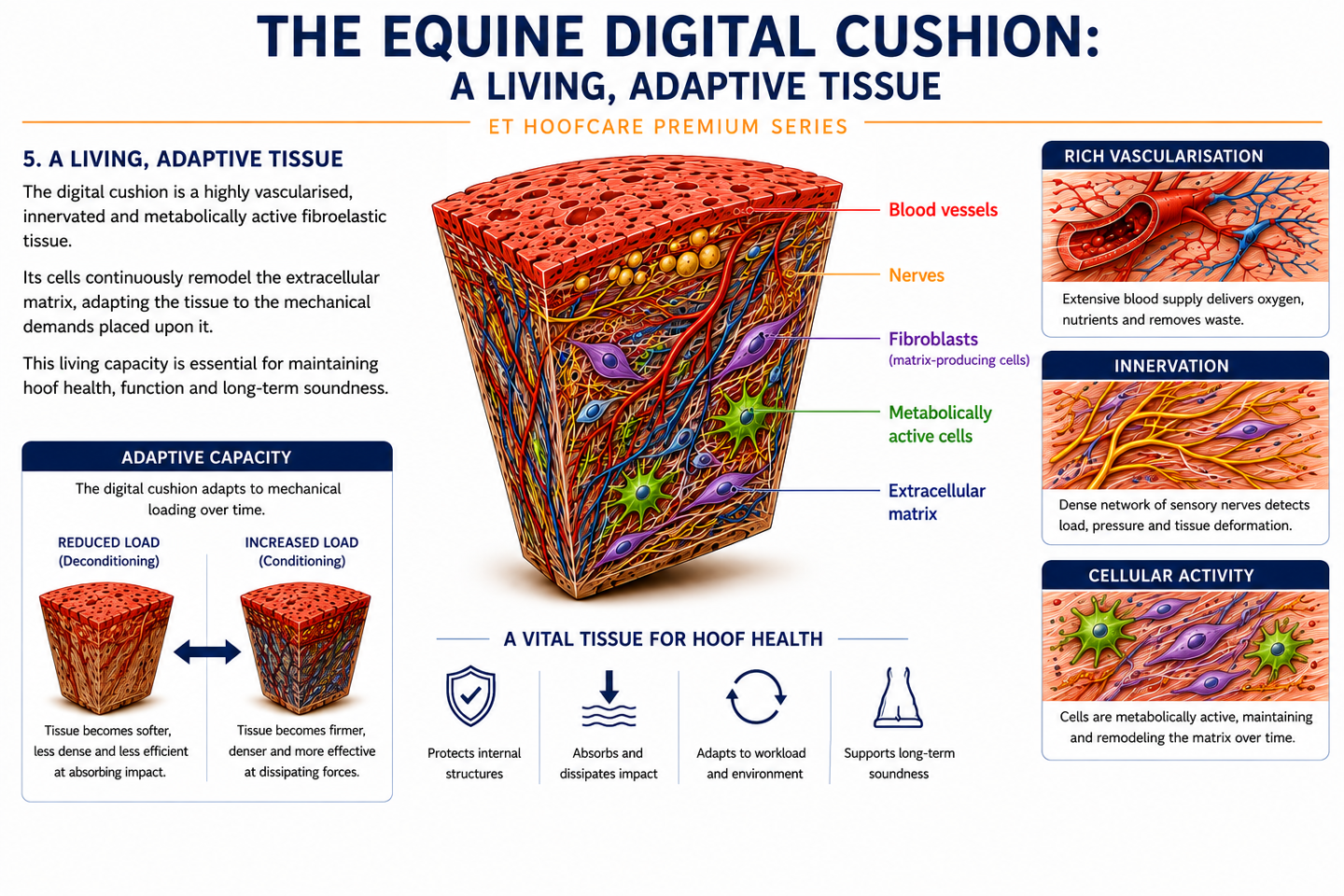
Unlike a mechanical shock absorber, the digital cushion is a living biological structure.
It contains blood vessels, nerves, metabolically active cells and specialised connective tissues capable of adapting to mechanical demands.
Its internal composition can change over time in response to the environment in which the horse lives and works.
Under favourable conditions, appropriate mechanical loading can contribute to the development of denser and stronger fibrocartilaginous tissue. Conversely, prolonged abnormal loading may be associated with degeneration and a greater proportion of fatty tissue.
This adaptive capacity is one of the defining characteristics of the digital cushion.
Rather than viewing it as a fixed anatomical structure, it is more appropriate to consider the digital cushion as a living tissue whose quality reflects, at least in part, its biomechanical environment.
Why Does the Digital Cushion Matter for Hoof Health?
The functional quality of the digital cushion has implications for the health and performance of the entire caudal hoof.
A healthy digital cushion contributes to efficient shock absorption, force distribution and hoof stability. Its close anatomical relationship with the navicular region also allows it to participate in the mechanical protection of important structures within the distal limb.
The digital cushion is also involved in the mechanical environment associated with hoof circulation.
Conversely, degeneration or poor development of the caudal hoof may be associated with underrun heels, weak frogs, poor heel function and chronic caudal hoof pain.
Reduced shock absorption can alter the distribution of forces through the hoof and may increase mechanical stress on other structures of the limb.
It is important, however, to avoid interpreting these associations as simple cause-and-effect relationships. The digital cushion is rarely the sole cause of lameness.
Hoof balance, conformation, workload, footing, trimming, shoeing and the horse's individual movement pattern all influence hoof biomechanics.
For this reason, digital cushion health should always be assessed within the context of the entire caudal hoof.
The Digital Cushion and the Caudal Hoof Complex
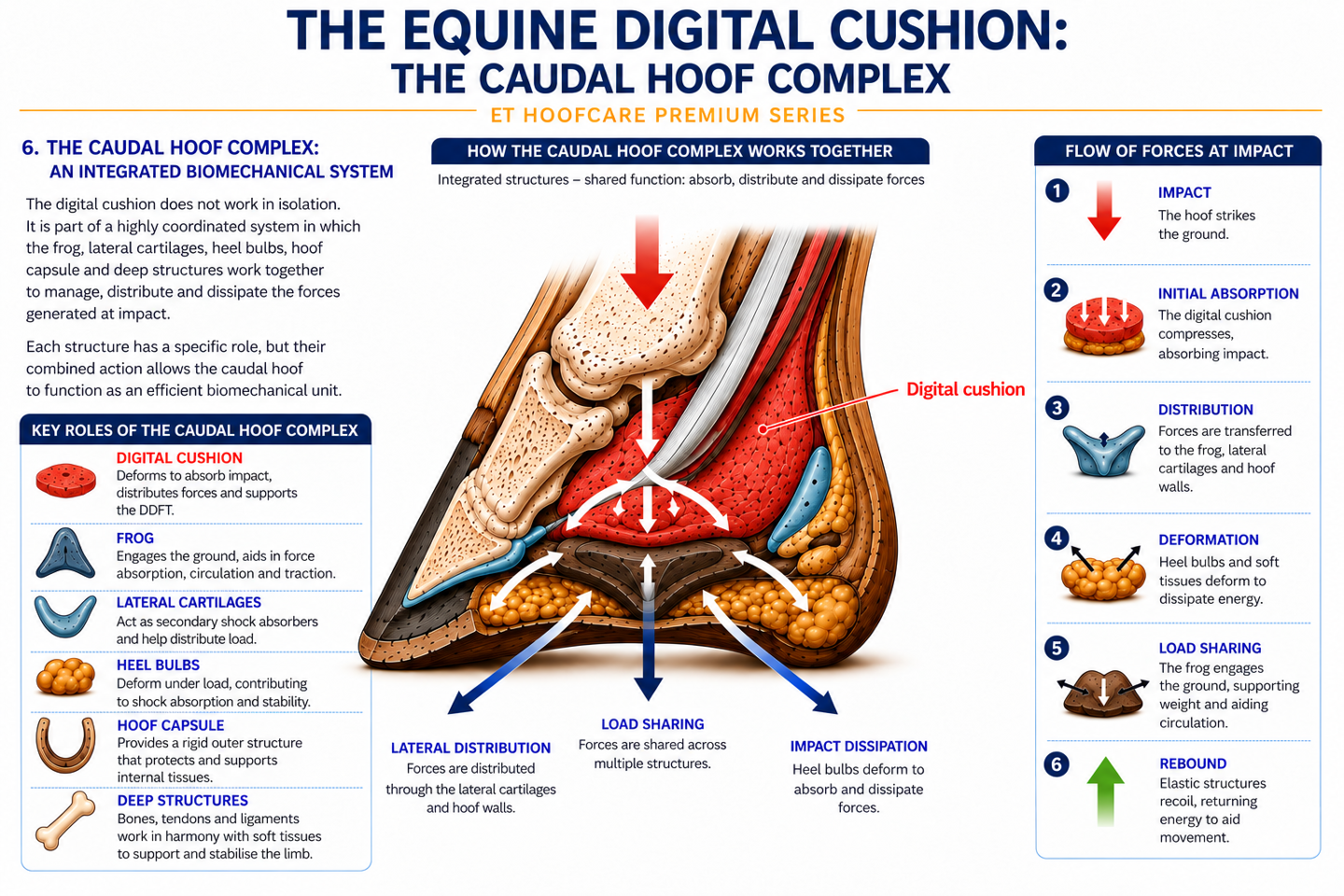
The digital cushion cannot be properly understood without considering the structures that surround it.
The frog, lateral cartilages, heel bulbs, hoof capsule and deeper soft tissues work together to manage the mechanical forces generated during locomotion.
The digital cushion is therefore one component of an integrated biomechanical system.
A strong digital cushion cannot compensate for every problem affecting the caudal hoof. Frog function, heel support, hoof balance and the horse's movement pattern all influence how effectively the system works.
This is why modern hoof care must look beyond the external appearance of the hoof capsule.
A hoof may appear visually correct while still functioning inefficiently under load. Conversely, external appearance alone cannot fully describe the condition or mechanical function of the internal structures.
The Relationship Between Structure and Function
The anatomy of the digital cushion helps explain why its structure is so important to hoof function.
Its proximal region provides deformability and vascularisation, while its more distal region contains stronger connective tissue and fibrocartilage capable of resisting compression.
Together, these characteristics allow the digital cushion to manage repeated mechanical loading without behaving like a simple gel or passive cushion.
The structure of the tissue therefore reflects its function.
Its ability to deform, resist compression, distribute forces and return towards its original shape allows it to participate in several stages of the hoof's loading cycle.
This is one of the reasons the digital cushion occupies such a central position in modern understanding of horse hoof biomechanics.
From Passive Cushion to Functional Organ
The traditional description of the digital cushion as a shock-absorbing pad is therefore incomplete.
The digital cushion is a living, adaptive structure capable of responding to mechanical stimulation. It contributes to impact management, force distribution, energy storage and the mechanical environment of hoof circulation.
Its function also depends on its interaction with the frog, lateral cartilages, heel structures and deeper tissues.
This integrated view represents an important shift in modern hoof science: the hoof should be understood as a dynamic biomechanical system rather than simply as a protective horn capsule.
ET Hoofcare Expert Insight
Modern hoof biomechanics clearly demonstrates that the digital cushion cannot be evaluated in isolation.
Its function is inseparably linked to the condition of the frog, lateral cartilages, heel structures, hoof balance and the horse's pattern of movement.
For this reason, successful hoof care should focus not only on the external appearance of the hoof capsule but also on the health and function of the entire caudal hoof.
A well-developed digital cushion forms an important part of an efficient hoof mechanism capable of absorbing impact, managing mechanical forces and supporting long-term hoof function.
Understanding these relationships allows farriers and veterinarians to move beyond a purely cosmetic assessment of hoof shape and towards a more comprehensive, function-based approach to equine hoof care.
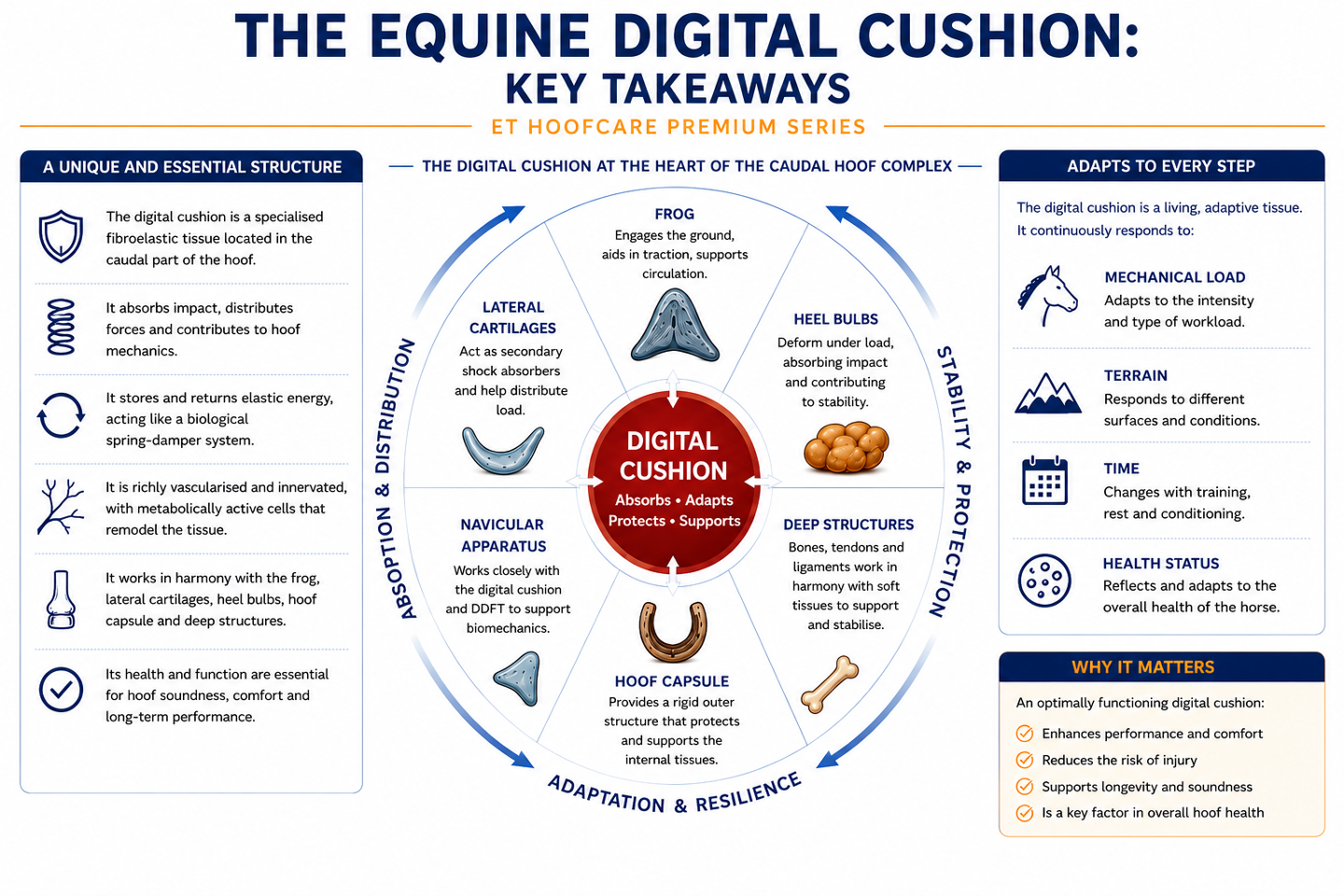
Key Takeaway
The equine digital cushion is far more than a pad of fatty tissue inside the hoof.
It is a living, specialised biomechanical structure composed of different tissues that work together to absorb impact, distribute forces, store and return mechanical energy and contribute to the functional environment of the caudal hoof.
Its condition is closely related to the biomechanics of the entire hoof. Frog function, heel development, hoof balance, movement and mechanical loading all influence how effectively the digital cushion can perform its role.
Understanding the digital cushion therefore means understanding the hoof as an integrated system.