Contracted Hoof in Horses: Definition and Impact on Foot Health
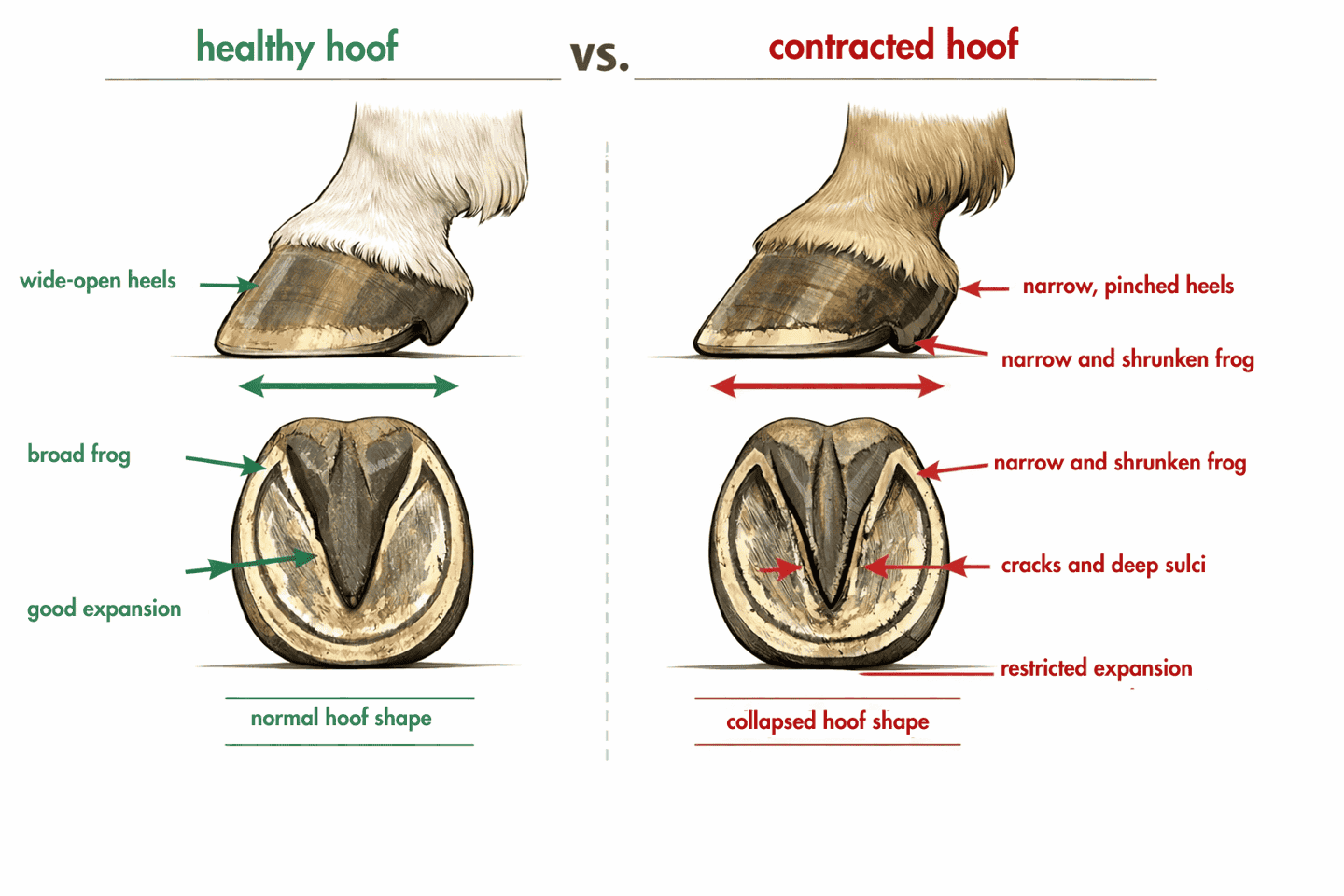
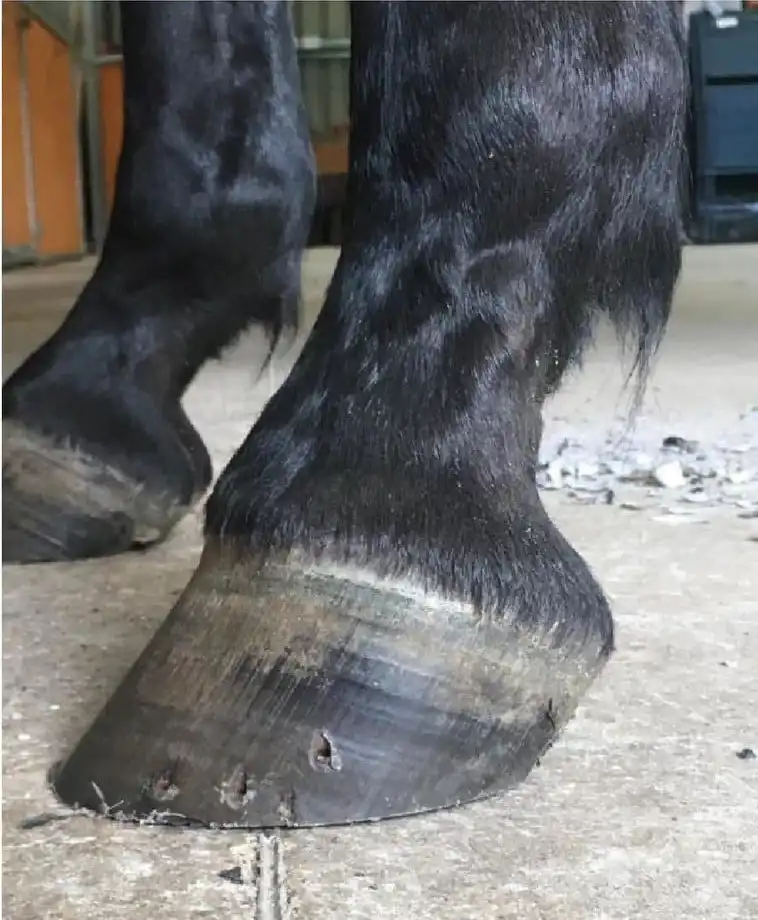
A contracted hoof refers to a pathological deformation of the hoof capsule: the heels narrow to the point of preventing the natural expansion of the foot. The frog, normally elastic and essential for shock absorption, becomes compressed and can no longer perform its role. The most common consequence is persistent pain, often accompanied by chronic lameness.
How to Detect a Contracted Hoof: Clinical Signs and Hoof Inspection
When a horse is lame and approaches with a distinct look, the problem is often advanced. However, careful observation of the hooves can reveal the first signs much earlier. The hoof wall should remain smooth and straight: cracks, lumps, or grooves should be immediately reported to the farrier or veterinarian. The coronary band, the transition zone between the hairline and the horn, should have a consistent height; any bulging may indicate inflammation. Likewise, the white line, where the nails are applied, should appear uniform and free of red spots. Lastly, the arrangement of the internal structures of the hoof provides important clues: heels, bulbs, and frog that are too close together, or separated by a deep fissure, often suggest the early stages of a contracted hoof.
Causes of Contracted Hoof: Trimming, Shoeing, and Environmental Factors
Contracted hooves rarely result from a single cause. Incorrect trimming — with heels that are too tight or uneven — disrupts the natural mechanics of the foot. Permanent shoeing can also prevent the physiological expansion of the hoof capsule. In addition, imbalances or conformation defects cause asymmetric overloads, as do unsuitable living conditions: lack of movement, hard ground, excessive moisture, or too restricted an environment.
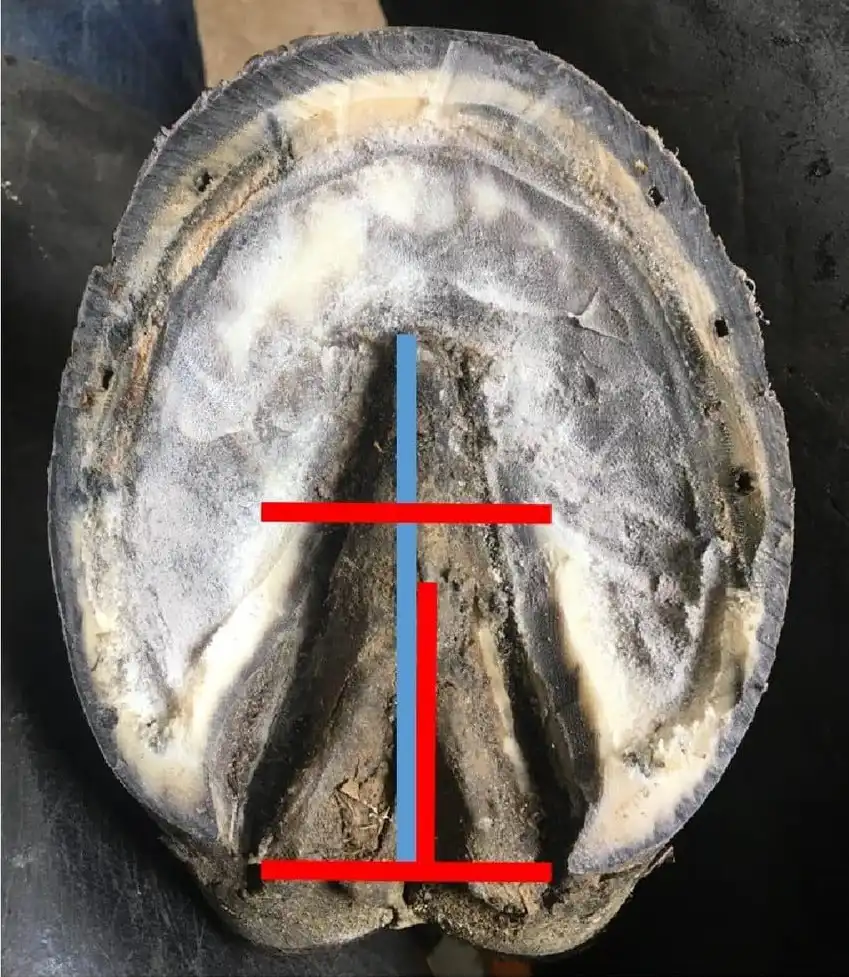
Contracted hoof: when the width of the frog is less then 2/3 of the length.
Types of Contracted Hoof: Coronary, Heels, Bearing Edge, and Sole
Deformation can appear at various levels. A coronary contracted hoof forms at the crown, while contraction along the bearing edge affects the lower part of the hoof capsule. The most common form remains heel contraction, characterized by significant narrowing that compresses the frog. In plantar contraction, the sole becomes concave, and the frog no longer touches the ground.
Symptoms of Contracted Hoof in Horses and Diagnostic Methods
Horses with contracted hooves typically exhibit narrow, upright heels, a pinched or atrophied frog, and more pronounced lameness on hard ground. The foot's mechanics lose their range of motion: the usual widening during weight-bearing is no longer observed. Pressure applied to the frog often causes sharp pain. Associated conditions are common, including frog rot, cornification, or navicular syndrome. Diagnosis relies on examination by a veterinarian or an experienced farrier, sometimes supplemented by radiographs.
Treatment for Contracted Hoof: Corrective Trimming, Orthopedic Shoeing, and Rehabilitation
Treatment requires time, consistency, and close collaboration between the veterinarian, farrier, and owner. Corrective trimming aims for gradual heel widening and improved frog function. In some cases, orthopedic shoeing — such as an open shoe or one designed to provide appropriate support — may be necessary. Barefoot rehabilitation can be effective in mild cases. Local care, such as regular cleaning and disinfection of the frog, supports healing. Controlled exercise on soft ground stimulates circulation, while optimized living conditions — dry bedding, non-aggressive surfaces, daily turnout — promote long-term recovery.
Prognosis of Contracted Hoof and Best Practices to Prevent Deformation
The prognosis is generally favorable when deformation is identified early; more advanced cases require several months of follow-up. Prevention relies on regular trimming every 4 to 6 weeks, a balanced diet, appropriate movement, and a clean, dry stable. Quick correction of conformation defects also reduces the risks.
Conclusion: Preserving Hoof Health to Enhance Horse Well-being
Contracted hooves are a serious condition that directly compromises the horse's comfort and mechanical abilities. Regular observation, coupled with quality care and an appropriate environment, is the best strategy to maintain flexible, functional, and healthy hooves.
We recommend these products: